
eralde
-
Posts
1916 -
Joined
-
Last visited
-
Days Won
96
.thumb.jpg.cdc44bfe799541fac6daa52f04326147.jpg)





eralde's Achievements

-

Revert Keenetic City KN-1511 back to 4.3.7 from 4.3.8
eralde replied to Chiz's question in Dev channel issues & test reports
That unfortunately is not possible. If you mark certain components to be added, while adding them the device will update firmware to the latest 4.3.x firmware. That probably means that your device was produced for the EAEU region. While you wait for the support team to respond, you can ask around on https://forum.keenetic.ru: somebody there may have the 4.3.7 firmware for your device with all the components you need. -
Revert Keenetic City KN-1511 back to 4.3.7 from 4.3.8
eralde replied to Chiz's question in Dev channel issues & test reports
Hello @Chiz you can check out firmware files available here: https://osvault.keenetic.net/KN-1511/4.03/ Please note, that the list of components in the files available there may be different from what you need. I suggest checking out corresponding txt file before uploading the firmware to your router. A better solution is to create a ticket with our technical support: https://keenetic.com/en/company/support -
Download station and different internet gateway
eralde replied to Luca Zammarchi's question in Feature Requests
Hi @Luca Zammarchi Please read this thread: It explains how to configure the Download Station for a setup similar to yours. -
Confirm Button Not Visible in "Install Updates" Screen / 4.3B3
eralde replied to ru.celebi's question in Dev channel issues & test reports
Hello @ru.celebi, which version of the firmware is currently installed on your devices? -
Core::Configurator: not found: "show/sc/mws/wlan"
eralde replied to PriSonerS61's question in Dev channel issues & test reports
Thank you for the report. This will be fixed in one of the future draft versions. The web UI relies on new parts of the API that are not yet publicly available. The error messages will go away, once the API is updated. -
Unfortunately, there is a bug in the Alpha 3, related to the firmware update process. I suggest that you use the recovery utility described here: https://support.keenetic.com/sprinter/kn-3710/en/21740.html#21740-keeneticos-recovery And then you should be able to update to Alpha 4, where this issue is fixed. The link above is for KN-3710, you can find the recovery utility relevant to your particular model, by entering it's name here: https://support.keenetic.com/ and then searching for "Restore".
-
Hello @simone bravo, this is the expected behavior. Your device checks for radars that may be working on frequencies overlapping with the 5 GHz Wi-Fi. This article has more details: https://support.keenetic.com/hero/kn-1012/en/43659-dfs.html
-
Should I even THINK about upgradng packages in OpenWRT?
eralde replied to Jim's question in Community Support & Knowledge Exchange
That really depends on the applications you want to use there. If you plan to use a BitTorrent client to download smth., then you may need more storage than available on an average USB thumb drive. In this particular case, an external SSD would be the best choice, but the maximum read/write speed will be limited by the USB port (SSDs are usually faster). You can transfer your existing OPKG configuration to the new drive. I don't have any personal experience with this, but I've seen reviews from people who have done it. -
Should I even THINK about upgradng packages in OpenWRT?
eralde replied to Jim's question in Community Support & Knowledge Exchange
@Jim, installing OPKG (the base system + all the packages you choose) on an external USB drive is the assumed default setup. It definitely works. -
Should I even THINK about upgradng packages in OpenWRT?
eralde replied to Jim's question in Community Support & Knowledge Exchange
You should also be able do delete everything created by the OPKG installer via the web UI/telnet. -
Should I even THINK about upgradng packages in OpenWRT?
eralde replied to Jim's question in Community Support & Knowledge Exchange
Hello, Jim 🙂 Nothing is wrong with trying OPKG if you want to configure something that is not possible with the stock firmware. That being said there is no official support for any OPKG-related issues, so if you have an issue you will have to refer to other users, e.g., here on the forum or in the OpenWRT community. However, since Keenetic firmware is not OpenWRT the advice you will get from the OpenWRT community may be not fully applicable. On the other hand, I would suggest that you just back up your router's firmware and configuration files (startup-config) once you configured the stock firmware the way you want it. You can do that via the web UI. Even if something goes wrong with the OPKG, you can go the the router's web UI, de-select the USB drive you've installed OPKG to and keep using the stock firmware until you want to try again. If the "something goes wrong" situation is worse and you can't access the web UI -- you will always be able to restore the stock firmware using the files you backed up *. * The startup configuration file does not contain encryption keys used in the Wi-Fi system or in WireGuard interfaces. That means that if you restore your router's configuration using a backed up startup-config file, you will have to re-acquire any Wi-Fi system extenders (if you have them) and re-create WireGuard interfaces (if you use them). -
How do I manage space/applications on my router?
eralde replied to Jim's question in Community Support & Knowledge Exchange
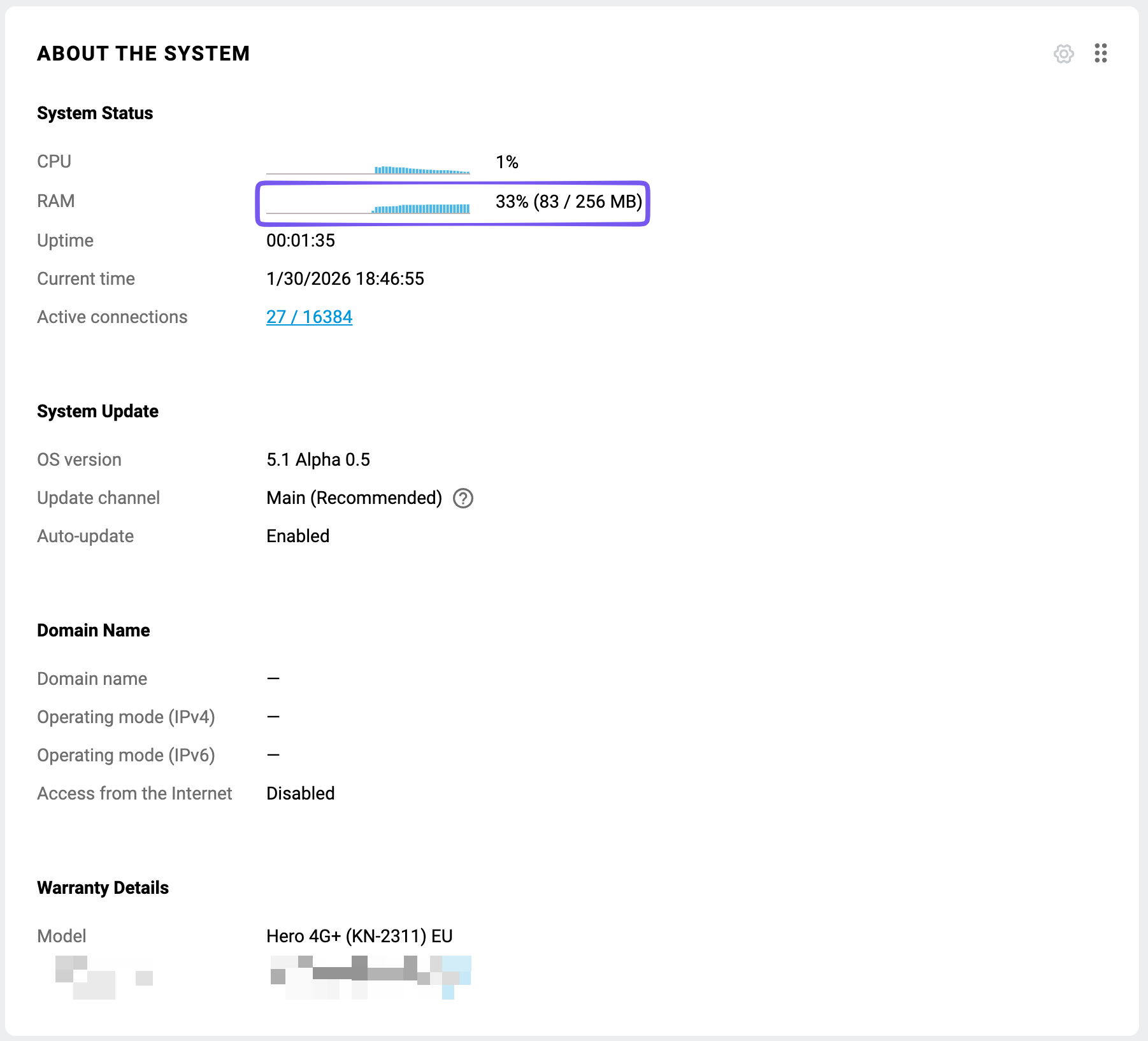
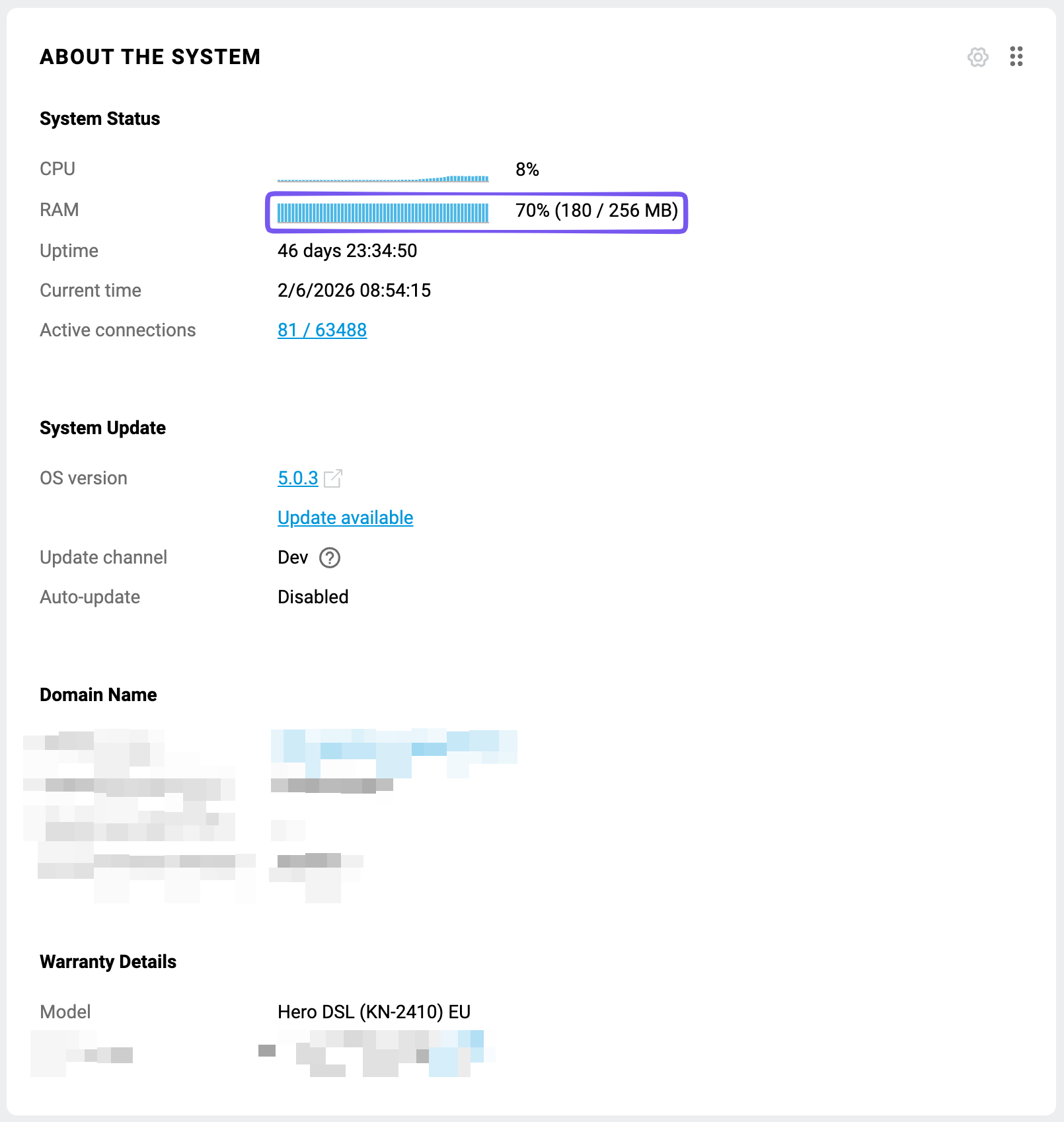
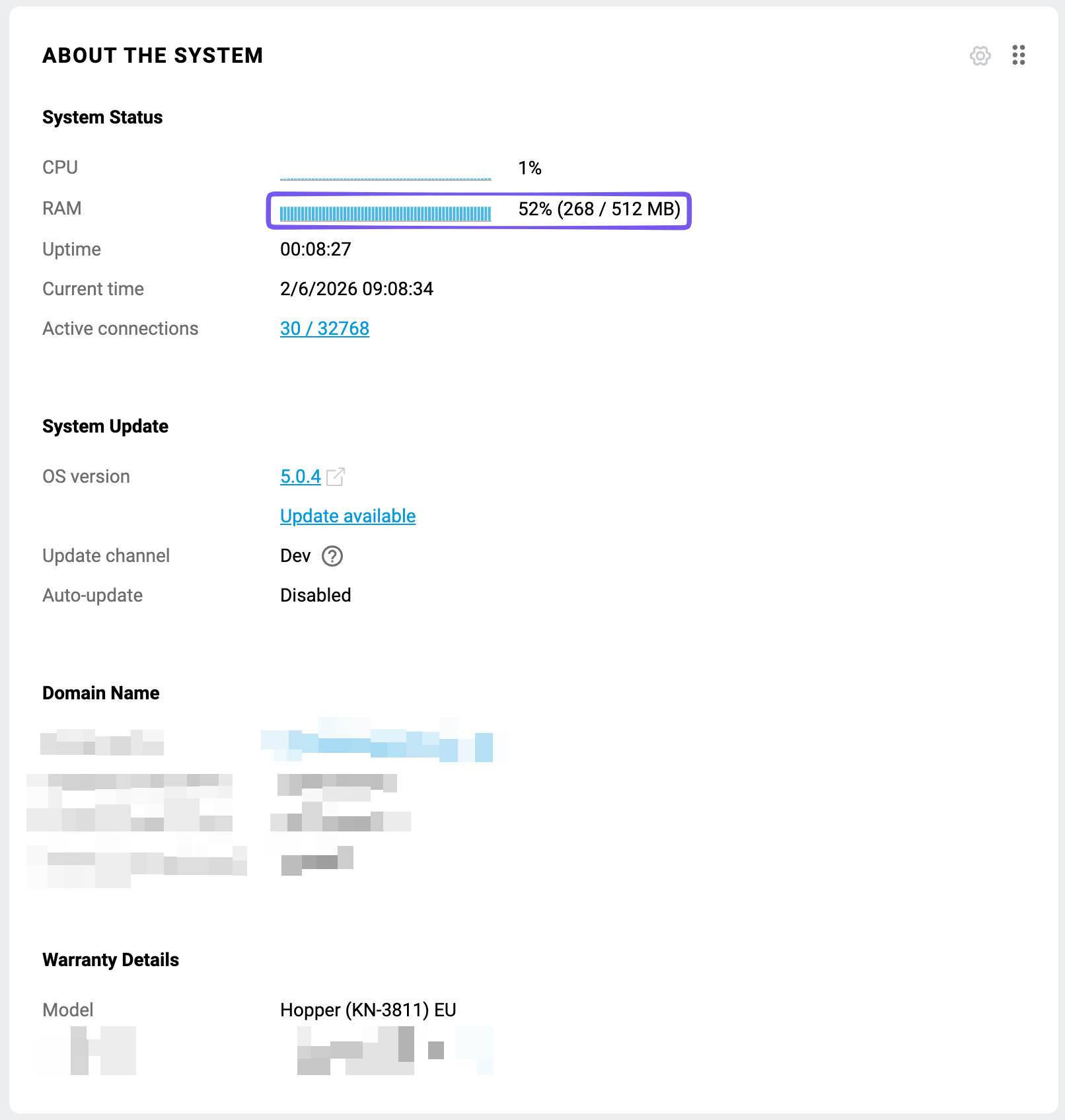
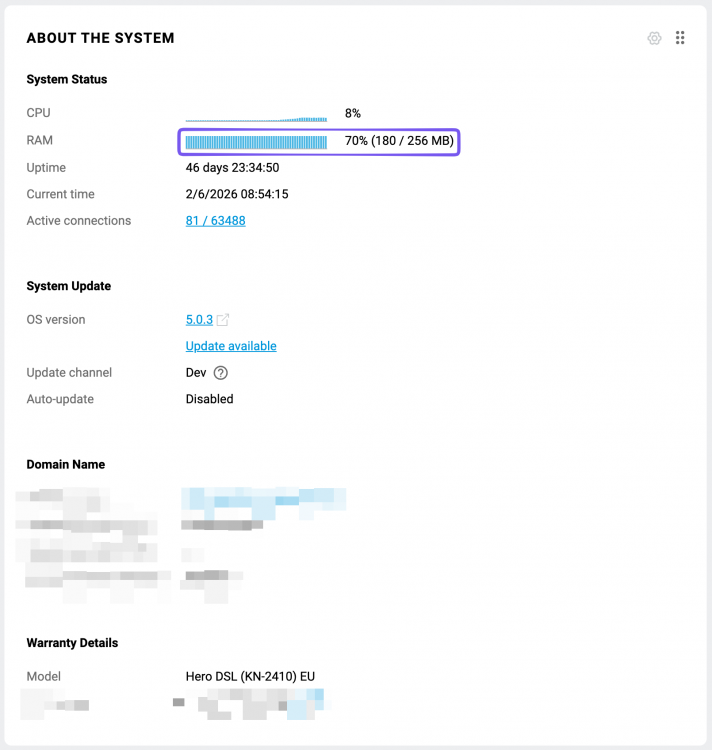
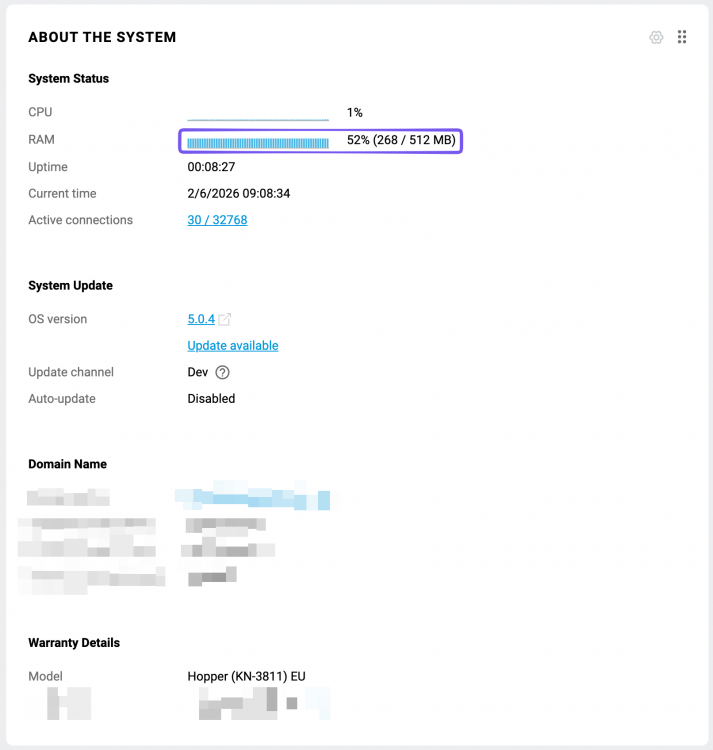
Hi, Jim! I am not sure I can answer all of your questions completely, but I will try to do my best: 1 + 2. If you are talking about RAM, then you can monitor that parameter in the web UI dashboard. There is no general rule of thumb on how many different service you will be able to run at the same time, so it is trial and error. If you meant permanent storage, than I would recommend to install the open package system on a USB drive. There is an option to install it on the device internal storage, but the available space will be quite limited. 3. You can check this GitHub repo and this section of the forum (the Entware Quickstart thread is a good start 🙂) 4. After setting up Entware/OPKG and logging into the SSH shell it provides, you can run opkg update && opkg list to see all the packages available for your device: 5. You can leave the "initrc script" field empty, the installer will fill this parameter automatically. Out KB article on how to install Entware on your router: https://help.keenetic.com/hc/en-us/articles/360021214160-Installing-the-Entware-repository-package-system-on-a-USB-drive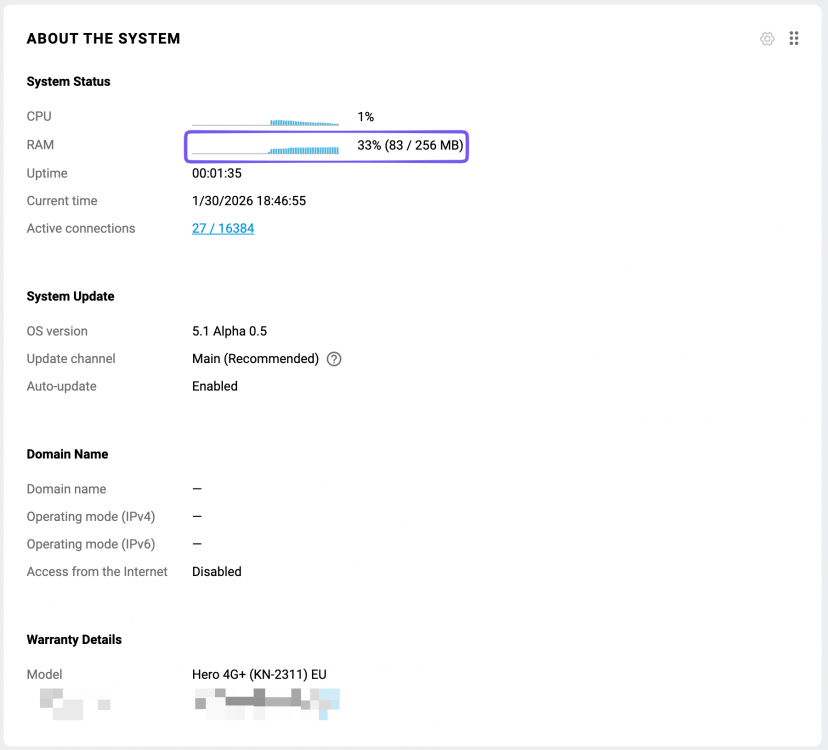
- 1 reply
-
- 1
-

-
Telnet rejected connection?
eralde replied to Jim's question in Community Support & Knowledge Exchange
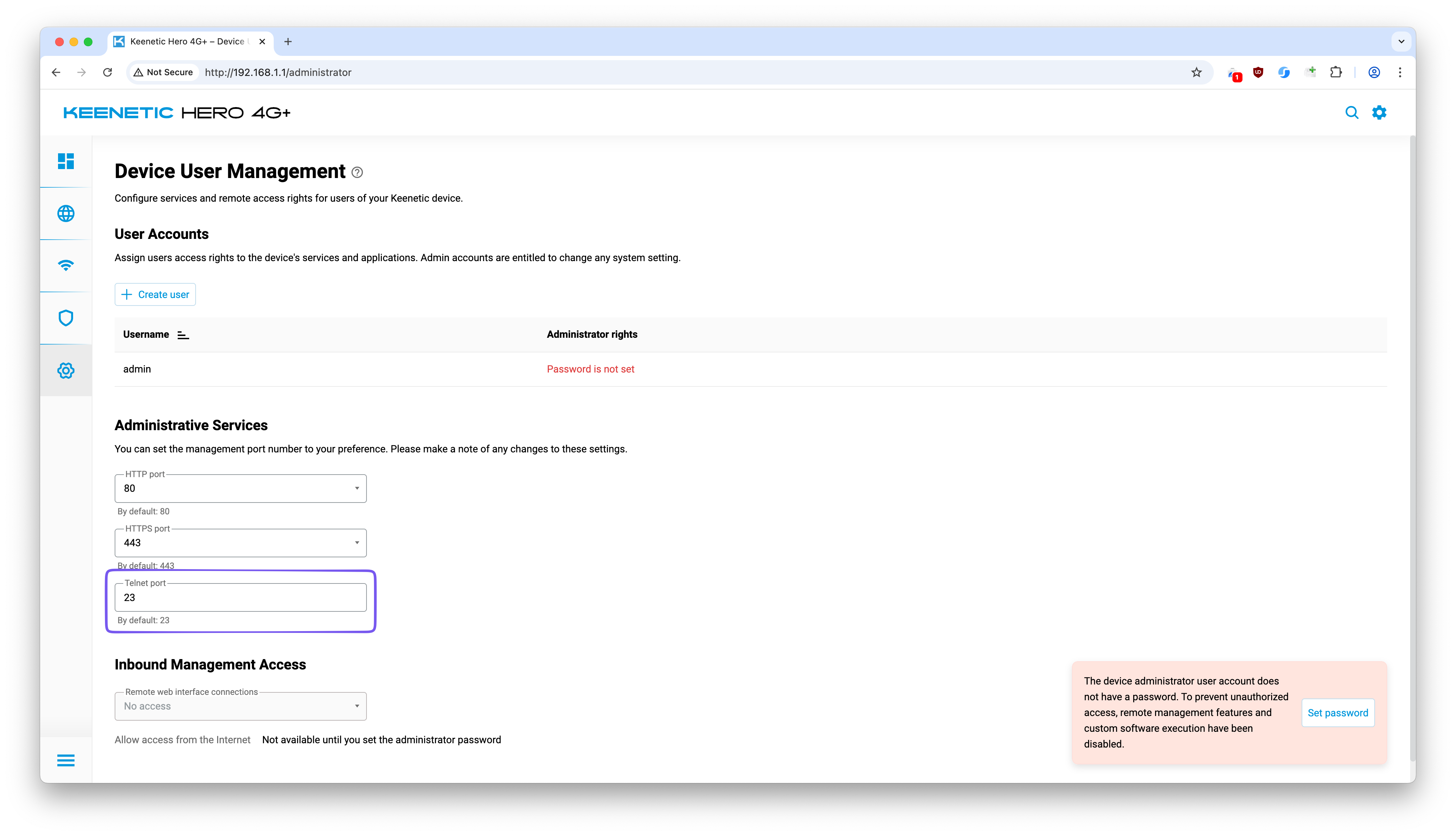
Okay, thank you 😅 That should not affect anything If you can access the router's web UI, you can check if the telnet port is the default one here: http://my.keenetic.net/administrator Also, from the web UI you can restart the internal telnet service: If that does not help, please download the self-test file from your device and attach it here, so we can check it (we will hide the message containing the file since it has some sensitive data in it, so you won't see it, but the moderators will still be able to access it).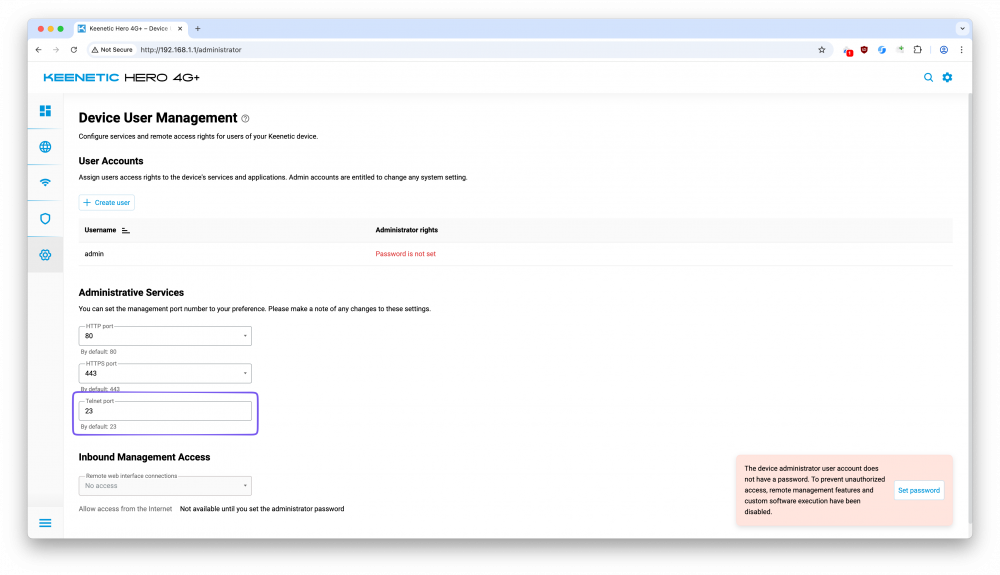
-
Telnet rejected connection?
eralde replied to Jim's question in Community Support & Knowledge Exchange
Hello, Jim The telnet access from the LAN should be enabled by default. I know this is a dumb question, but is your computer in the local network of your router when you try to connect it to the router? (i.e., is it connected to one of the grey Ethernet ports on the router/to router's Wi-FI) -
Wifi scheduling for nodes TitanBE7200 + 2 Buddy 6
eralde replied to Giaccaz's question in Community Support & Knowledge Exchange
Thank you for explaining why do you want it 🙂 We will keep that scenario in mind for the future. I would be happy to give you a timeline, but at this point, it's difficult to do so. We definitely have 10G models in our roadmap.